Remembrance of Contemporary Events: On Setting Up The Sunflower Movement Archive
Tyng-Ruey Chuang <trc@iis.sinica.edu.tw>
Institute of Information Science, Academia Sinica, Taiwan
2018-09-06
[Bio: Tyng-Ruey Chuang is an Associate Research Fellow at the Institute of Information Science, Academia Sinica, with a joint appointment at the Research Center for Information Technology Innovation, and at the Research Center for Humanities and Social Sciences.]
[Note: This is a revised submission to the Digital Scholarship in the Humanities, pending acceptance. It is released under a Creative Commons Attribution 4.0 license.]
Abstract
In the late evening of March 18, 2014, students and activists stormed into and occupied the main chamber of Taiwan's Legislature. The event set off the Sunflower Movement, signifying a turning point in Taiwan's recent history. Researchers at Academia Sinica arranged to acquire all the supporting artifacts and documentary materials in the chamber before the protest came to a peaceful end. In this paper, we discuss the issues in archiving and making available to the public a large collection of artifacts created by thousands of participants during a contemporary event. We demonstrate systems designed to encourage people to identify objects of their own in the archive. We show how an accessible catalog to the archive can help people tell their stories, hence collectively may strengthen the public's recollections about the movement.
Background
In the late evening of March 18, 2014, a small group of students and young activists stormed into the main chamber of the Taiwan's Legislature in protest of the hastily reviewed and pending enactment of the Cross-Strait Service Trade Agreement (CSSTA) with China (see Fig. 1). The occupation of the Legislature would last several weeks. It would grow into an island-wide movement with a strong popular support. In its aftermath it would amend the course of Taiwanese politics, as well as the country's relation to China. It was a major contemporary event in Taiwan, and continues to influence the political landscape and societal reflection in the island. The occupation of the Legislature was streamed live, and when people vacated from the chamber they left behind a massive amount of supporting artifacts and documentary materials. What would ones do with these artifacts and materials, presumably soon to be abandoned, vanished, and forgotten? What would the archivists — or anyone who was ever involved in the movement — do in preparing for future generations to remember these events?
A few historians in Academia Sinica, Taiwan, seized this opportunity and reached a general agreement with the occupants to systematically collect what were in the Legislature main chamber before they were preparing to end the protest. Afterward Academia Sinica suddenly got a hold of a large collection of artifacts created by thousands of participants in a contemporary event. In this paper we discuss a few issues involved in digitizing and archiving the artifacts from contemporary events of this nature. We outline our approach to addressing them, and we present the current status of this archive. The archive is called the 318 Civil Movement Archive at Academia Sinica. More background information about it can be found at the archive website (318 Civil Movement Archive, 2017). As this movement has since become better known as the Sunflower (Student) Movement (Wikipedia, 2018), in this paper the term Sunflower Movement Archive and the term 318 Civil Movement Archive will be used interchangeably to refer to the archive initiated at Academia Sinica. Often we simply call it the Archive.
Principle
To strive for general access to the Sunflower Movement Archive probably was our topmost principle when we were starting to digitize the artifacts. This principle, however, shall be applied to a conflicting context of requirements and constraints. On the one hand, making the archive publicly accessible — on the Web of course — keeps Academia Sinica accountable to the activists (and to the public as well) about what it is doing. Academia Sinica will keep its promise in preserving all the artifacts it has acquired, and the proof is in the form of a Web catalog of all the digitized artifacts. On the other hand, as the artifacts are made by individuals, and some are of a personal nature (encouraging notes to the activists, for example), the individuals' personal privacy, publicity rights, as well as copyrights can be vulnerable when digital copies of the artifacts are made available for all to examine and use.
Because of these considerations, only thumbnail images of the artifacts are made available on the Web for the Archive. The thumbnails are still useful for artifact identification (more about this later), but they are of no plausible other values. In addition, sensitive information inscribed in the artifacts, such as recognizable signatures and phone numbers, has to be pixelated to prevent misuse. No doubt there are boundary cases challenging our judgments. Often we will rather be safe than be sorry, hence will not release even thumbnail images at all for some artifacts. Still, how shall we deal with a banner with hundreds of signatures, sent in by overseas students to support the occupants? Scrubbing out all the signatures from the digital image of the banner will surely defeat the purpose of such an expression of solidarity. We make it a general rule that if it is a form of public communication, it shall be made public, even if personal information (names, signatures, affiliations, etc.) is on the artifact.
If what will be made available are just thumbnail images and artifact metadata, this Web archive will not be too interesting. As participation in the movement is both personal and collective, we hope people will use the online archive to identify artifacts of their own (creation), and to make available high-resolution images of the artifacts to the public for general reuse. That is, we want the Web archive to be a conduit to help transit a collection of orphaned works into a domain of collective remembrance. A feature is built into the online catalog to allow registered users to identify artifacts of their own. Once identified, the user can choose to release the high-resolution image of the artifact to the public under one of the six Creative Commons Licenses, or to elevate it to the public domain by using the CC0 Public Domain Dedication. Of course, the claimant may choose instead to reserve all copyrights to the work. In this case, the high-resolution image will not be made public. To facilitate better search of the Archive, each item in the collection is annotated with rich metadata, including a transcription of the text appearing on the artifact (for example, the words in a note). People have used this feature to find and release artifacts of their own making in spite of (or because of) the artifacts have been archived (and put online) for this historical event.
At the same time when the physical artifacts were being digitized, we also began to collect born digital documentary media such as photo images and audiovisual recordings. At the time of the Sunflower Movement, these media were widely dispersed on media sites (e.g. YouTube), social networks (e.g. Facebook), and storage services (e.g. Dropbox). After the event, these media may be removed for various reasons, buried in new materials, or become hard to locate. Many service providers where these media are hosted often scale down the uploaded originals into low-resolution media, transform them into less desirable formats, and/or strip out all the metadata embedded in the original media (e.g. EXIF data in photos). These tainted media are not good for archival purposes. We chased down some of the most well-known citizen media activists who were broadcasting and reporting the events. We acquired batches of original files from them. By going after the original producers, we also get to keep a better record of the provenance of the digital media in the collection. Many providers chose to donate the entire video collections on their hard drives to the Archive, by the use of the CC0 Public Domain Dedication.
Use and Identification
We feel it necessary to have a Terms of Use (ToU) for the publicly accessible catalog to the Archive (318 Civil Movement Archive, 2017). By this, we will be able to communicate clearly to the public the purposes of the Archive, as well as the various conditions and considerations when using the catalog. As the catalog is free and open, even without registration, for all to search and browse the Archive, we do not want the ToU to sound discouraging. Still, the catalog is the outcome of a provisional project at a research institution. We cannot really warrant the continuity and accuracy of the catalog and the services associated to it (in particular when the funding was very uncertain in the beginning). Nor should we be held liable for people's use of these services. The ToU keeps users aware, and requests their understanding, of the rights of publicity, the rights to privacy, and other rights of the individuals whose artifacts have been collected — or whose appearances have been recorded — in the Archive. We also worry about the Archive being used by authorities as a source of evidence to pursue legal cases. Therefore, specifically in the ToU, we ask all users “not to cause civil or criminal disputes,” and “not to commit harassment, threat or other misconducts on any individual.”
We now demonstrate how anyone can use the Archive. Let us use as an example the hand-written note shown in Fig. 2. This item is a small post-it note written by a student from the Chinese University of Hong Kong. It is part of a large panel sent in by the students from Hong Kong to support the students occupying the Legislature. The panel is shown in Fig. 3, with all the notes attached to it, as it is in the catalog. Each note attached to the panel has been individually digitized and cataloged; the note in Fig. 2 is but one of them on the panel. Fig. 4 is a photo of the panel hanging on the wall in the main chamber of Legislature during the occupation. As the hand writing in the note has been transcribed into text and becomes part of the item's metadata, one can search for it in the catalog using a few key phrases. In the note, the student says s/he is from the Department of Social Work. Using the Chinese phrase for Department of Social Work, we search and indeed find this item in the catalog, as shown in Fig. 5.
Would anyone actually use the catalog to search and identify his or her own artifacts? We asked this question ourselves when deciding to add functionality to the catalog to allow registered users to identify, online, artifacts of their own. We were not sure. But once the functionality is there, and after some publicity about our work on the Archive, some people do start to identify their works and mail us their Copyright Declaration and Release forms (318 Civil Movement Archive, 2017). Fig. 6 shows a work of art. It was identified by its creator using the catalog to the Archive. After the identification, he also releases the art work under a CC BY-NC-SA 3.0 TW license. By identifying it, the work can now be attributed to his name (Zuoma). By releasing his works under a Creative Commons license, he allows us to make available high-resolution images of his works to the public. Fig. 7A shows the template of the Copyright Declaration and Release form. A customized form will be generated automatically once an artifact has been identified by its maker. The PDF form will have included all the necessary information (about the item being identified, and the person identifying it). It just need to be printed out, signed, and mailed to Academia Sinica — no stamp required (Fig. 7B) — by the identifier.
Who is Zuoma, the maker of the art work? What does s/he look like? People may ask. We shall know as we happen to meet him in person! In Fig. 8, he is holding his own work, now part of the collection of the National Museum of Taiwan History (NMTH). Since November 2016, all physical artifacts in the Archive had been transferred to the museum by a mutual agreement between Academia Sinica and the NMTH. The photo was taken at a press event on 2016-11-14 at the NMTH, where a one-day conference was held on topics of preserving and archiving artifacts from contemporary events. By building information systems encouraging people to reconnect with the artifacts that had been left behind, we aim to help resurrect people's memories about the events. In this particular case, we did get to learn why and how Zuoma made this and other art works in the Sunflower Movement.
Some Statistics
As of September, 2018, the Sunflower Movement Archive includes 9098 items of which 1757 items are born digital objects (photo or video) and 7341 items are physical artifacts (including 125 3-D works). The catalog lists only 9094 items of which 1354 are in the public domain (released under CC0), 179 are released under the Creative Commons licenses, and the rest are of unknown copyright status (not yet identified by their owners). We acquired the majority of the videos from a handful of people; they all agreed to use CC0 for their videos. For some reasons, 4 videos are not publicly accessible.
Many of the 7341 artifacts are encouragement notes (3388), paintings (1294), and slogans (1215). Quite a few are art works, including several sculptures. Most of the encouragement notes are in the form of sticky post-it notes, postcards, or letters. They were sent in by the supporters. There are objects of various kinds in the collection. There is a white jacket (<http://public.318.io/18132>), a Teddy bear (<http://public.318.io/13151>), and a piece of cake (<http://public.318.io/12398>) for example. The cake is part of a three-piece art work; it had been duly transferred to the National Museum of Taiwan History.
Although the catalog is equipped with a feature to identify artifacts, up to now only 17 items (all physical artifacts) have been identified. Few people participated because, we think, this feature (and the Archive in general) has not been well publicized. Also, people need to register before they can proceed to identify. They must sign, and return by post mail, the copyright release forms for the identifications to take effect. These are barriers to participation. We were nicely surprised, however, by the identification of a drawing from a mother on behalf of her little daughter (<http://public.318.io/18157>). The mother and daughter released the work to the Public Domain (via CC0).
Current Status
The catalog of the Archive has been online since March 2015, roughly one year after the events setting off the Sunflower Movement. So far we have not received any complaint about putting the catalog online. For long-term preservation, Academia Sinica has made arrangement with the National Museum of Taiwan History (NMTH) to transfer the Archive to the Museum. The information systems managing the entire collection of digital media, including high-resolution images of all the artifacts, are developed and released as open source software packages. As such, Academia Sinica and the NMTH both can host the digital archive on the Web. Currently the digital archive is still hosted at Academia Sinica even though all the artifacts had been transferred. The museum by itself has been collecting artifacts from various contemporary events for many years, including those from the Sunflower Movement. What Academia Sinica had collected were from the main chamber of the Legislature. The NMTH collected many more from other sources. There is a tentative plan between Academia Sinica and the NMTH to mutually enrich their digital collections on the Sunflower Movement.
An online recollection of the 318 Civil Movement, drawing from a group of individuals loosely connected to the people working on the Archive, was announced and made public on March 18, 2015, the first anniversary of the events leading to the Movement. The recollection is a website expressed as a map of Taiwan covered with images and narratives; these are individual stories told with supporting materials drawn from the Archive or from other sources (318 Civil Movement Expo, 2017). We imagine any person, any group of individuals, can use this catalog to the Sunflower Movement Archive to tell their stories. Each item in the catalog has a permanent link; anyone can use the links to weave stories about the various events in the Movement.
Discussion
Remembrance of contemporary events can be both personal and collective. When artifacts are collected from contemporary events, individual and public access considerations constrained what shall and can be done with the artifacts. We hope we have maintained a balance in setting up the Sunflower Movement Archive. We hope our experience can draw some attention to, and incite more discussion about, the issues that are involved in building archives of contemporary events.
We would like to emphasize that the work on the Sunflower Movement Archive is but one among the many in the field of digital archiving and curation. Before the Sunflower Movement started in Taiwan, there had been many Occupy movements elsewhere in the world. Some of these movements continue, in various online forms, to the present day. The most noted probably has been the Occupy Wall Street movement starting in September 2011 in New York City.
These contemporary movements have certain initial places where the occupations started (e.g. Zucotti Park in NYC for Occupy Wall Street, and the Taiwanese Legislature for the Sunflower Movement). As the mode of participation is fluid, self-organizing, and distributed in nature, these Occupy events soon transform into movements that are global and real-time. By the prevalent reach of digital networks, and the use of online tools and social media in the coordination, witness, and propagation of various participatory events, these Occupy movements often spread freely. Artifacts produced by and for the movements, both physical and digital, are necessarily dispersed and diverse. How better to collect movement artifacts as the events are unfolding has been a major challenge for archives, libraries, and museums (Besser, Farb, Grappone, and Jamshidi, 2014; Morrone, 2014). Limited by both man power and technical means (especially for born digital materials), artifact collections initiated by memory institutions for civil movements therefore usually are post-event, segmented, and selective. The setup of the Sunflower Movement Archive is of no exception.
When the Occupy Wall Street movement was breaking out, some faculty members and students from New York University, as well as several "Activist Archivists", started to interact with the occupiers about the long-term preservation of movement artifacts (Ashenfelder, 2012; Evans, Perricci, and Roberts, 2014). These pioneers offer some advice. Contextual information — when, where, and by whom the artifacts were produced and used — shall be collected and preserved at the same time. For audiovisual materials, it is paramount to both keep intact the metadata embedded in the media by the recording devices, and have a separate record (e.g. on paper) on their production environment. Without context, it is difficult to recall afterward why and how the artifacts were collected.
We note that, when archiving for contemporary events and movements, memory institutions face difficulty in giving coherent narratives to the collections they have assembled. This is evidently the case when we observe and compare, for example, some of the collections about the Occupy Wall Street Movement. To begin with, it is already an issue on what and how to collect. At the Internet Archive, the Occupy Wall Street collection is formed by media uploads by registered users that "use OWS as a keyword" (Internet Archive, 2017). The library at the New York University, meanwhile, mainly includes the Occupy Wall Street "Archives Working Group Records" in its special collections (New York University, 2017). The Roy Rosenzweig Center for History and New Media, known for its outstanding works on several memory websites, opts to rely entirely on voluntary submissions in its Occupy Archive project (Occupy Archive Project, 2017). None of the above includes stories, or even a chronicle, about the Movement — the Sunflower Movement Archive is no different in this respect.
The Archive presents materials collected from the occupied chamber but does not offer a perspective on the Movement. The other website we make available, announced on the first anniversary of the events, however is a collection of individual stories about the Sunflower Movement. By constructing two distinct websites, we had made a decision to separate personal stories from the Archive catalog itself. The Archive is presented in itself without a narrative. For those involved in building the Sunflower Movement Archive, they nevertheless can be thought as practicing activist archiving. There are stories about why and how the artifacts were collected, and on the way the Archive came into being. This paper can be considered as part of the story. Moreover, Academia Sinica and the National Museum of Taiwan History each has a defining role in the making of the Archive. Sustaining and enriching the Archive could well be a long-lasting effort; people related to the project continue to reflect on this endeavor (Chuang, 2016; Hwang, 2014; Tsai, 2017).
The Sunflower Movement is being documented and remembered by many people and in different ways. Individual stories and reflections, about the events and dramas in and around the Movement, have been compiled and edited into books. More than a few have been published. Some are based on citizen reporting and grassroots media. Works of photography and illustration, as well as video documentaries, started to appear. Among these narrative forms of remembrance, we take a special note on the Daybreak Project which is "an interactive encyclopedia and oral history archive" of the Movement (Hioe, 2018). This online collection of interviews and writings was launched in March 2018. It offers to present the multiple viewpoints and perspectives from the many people involved in the Movement. This collection of narratives is almost the opposite, both in focus and in process, of our Archive of the artifacts. We feel, however, the two are complementary in function to each other.
The Wikipedia entries on the Sunflower Movement, being continuously discussed and edited, are living and changing documents about the Movement. As such, the Wikipedia is not just an encyclopedia of impersonal facts, but acts as a carrier of folk memories for those who care. Once in their digital forms, artifacts and narratives about past events can be distributed freely. This enables the reuse and remix of these digital objects in people's recollection and retelling about the events in their past. It has been well noted that "the practice and processes that contribute to the shaping and legitimation of digital heritage" is a social work, conducted by a variety of actors, and at several scales (Musiani and Schafer, 2017).
Our effort in the Sunflower Movement Archive is related to the many existing works in catching the ephemeral but personal, as compared to those in holding on to the permanent and institutional. We look forward to learning from, and extending further, the practice in post-disaster remembrance and diasporic recollection. We live in a world mediated by information networks. The world persists in challenging us to preserve and provide access to the diverse collections of digital resources in contemporary events (Dulong de Rosnay and Musiani, 2012; Hajek, Lohmeier, and Pentzold, 2016).
Acknowledgement
Work on the Sunflower Movement Archive has been funded by Academia Sinica and is a collaboration between the Institute of History and Philology and the Institute of Information Science. The author thanks all the collaborators, especially Ming-Chong Hwang who initiated the collection of the artifacts and invited the author to join the project to archive them digitally. We thank Chi-Ling Lai, Shih-Ting Tang, and Chia-Hsun Wang for their enduring hard work on this project. Digital Memory Asia did all the digitization work. Word Gleaner Ltd. built all the information systems. Without their help, this project could not finish on time. We thank Shu-Jiun Chen for her advice on metadata, and to Shun-Ling Chen for her legal advice. The author is very grateful to Mike Linksvayer for his early feedback and many comments on the project and this paper. The suggestions from the two reviewers have been very helpful and much appreciated.
We thank the Academia Sinica Digital Center, the Research Center for Information Technology Innovation, as well as the Office of Vice President Fan-sen Wang, Academia Sinica, for their support. Under a mutual agreement between Academia Sinica and the National Museum of Taiwan History, the entire collection of the Archive had been transferred to the Museum. We thank the Museum for giving the collection a most proper home.
Figures
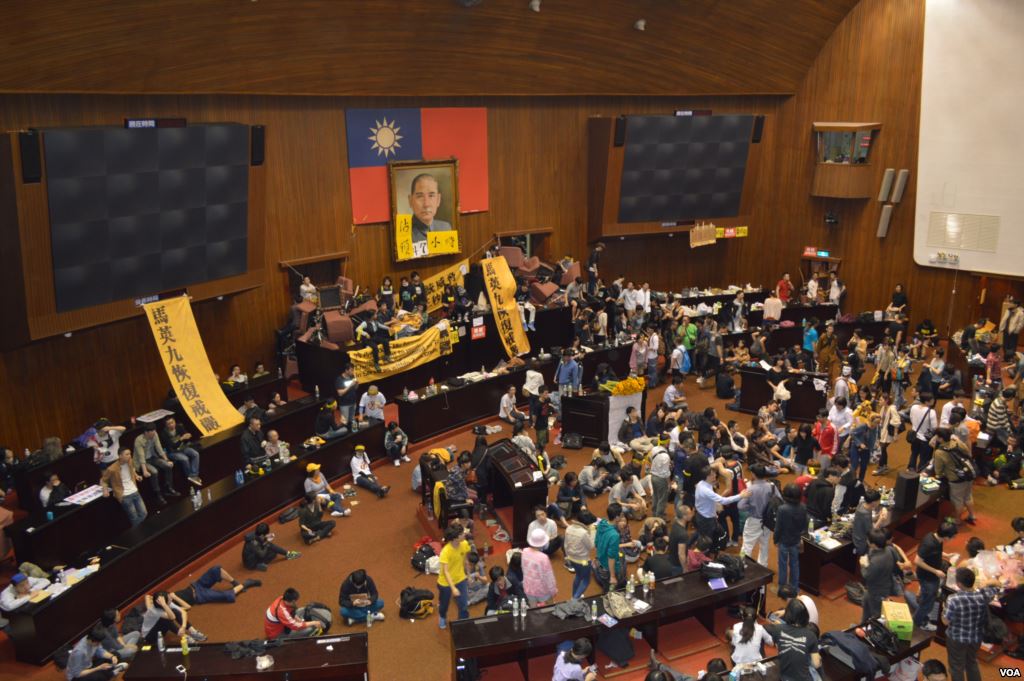
Fig. 1. Students occupying the main chamber of the Legislature (Voice of America, 2014; Image source: <https://commons.wikimedia.org/wiki/File:Occupy_Taiwan_Legislature_by_VOA_(1).jpg>).

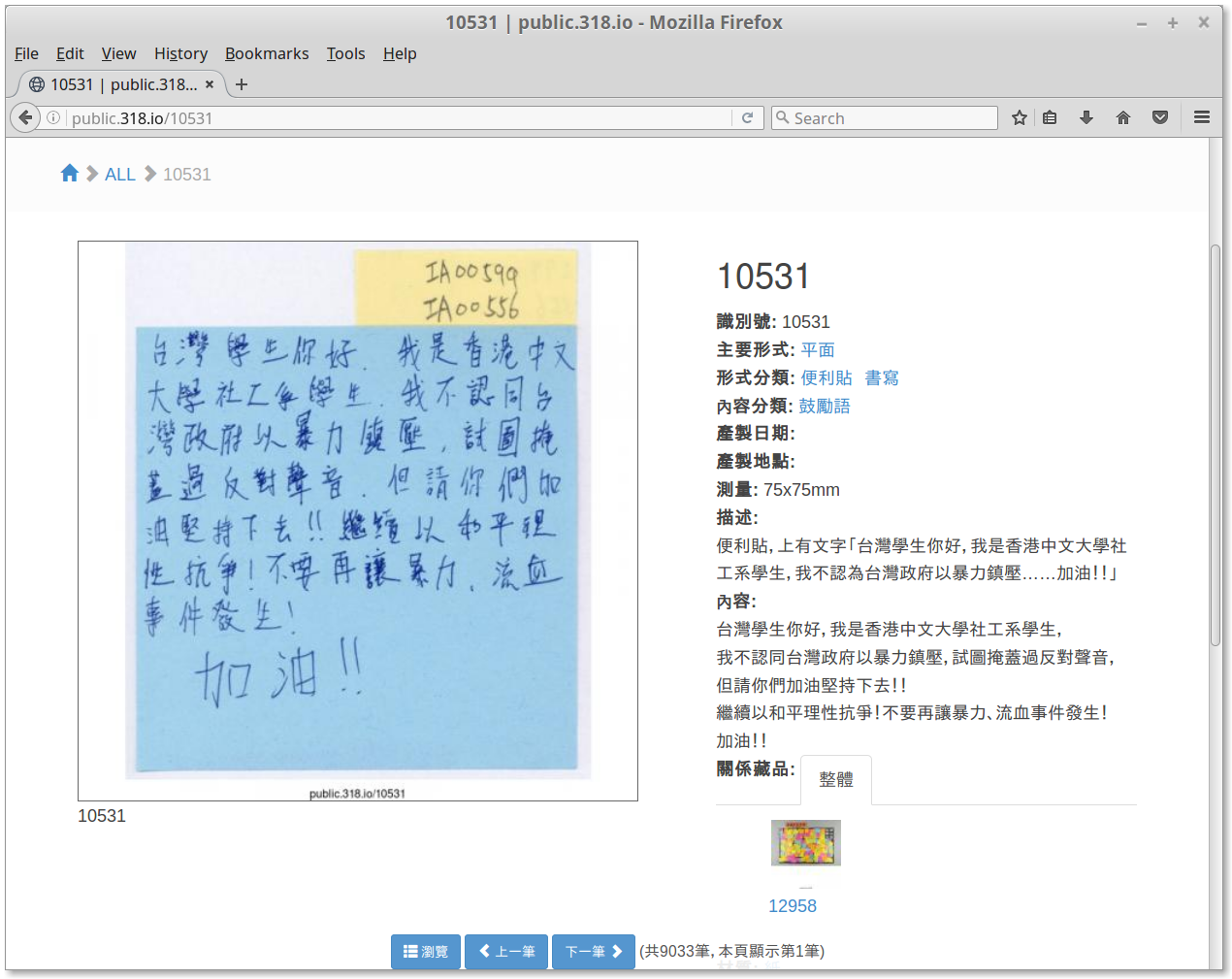
Fig. 2. A supporting note from a student at the Department of Social Work, Chinese University of Hong Kong. Archive page: <http://public.318.io/10531/>.

Fig. 3. A panel of supporting notes from the Chinese University of Hong Kong. Archive page: <http://public.318.io/12958/>.
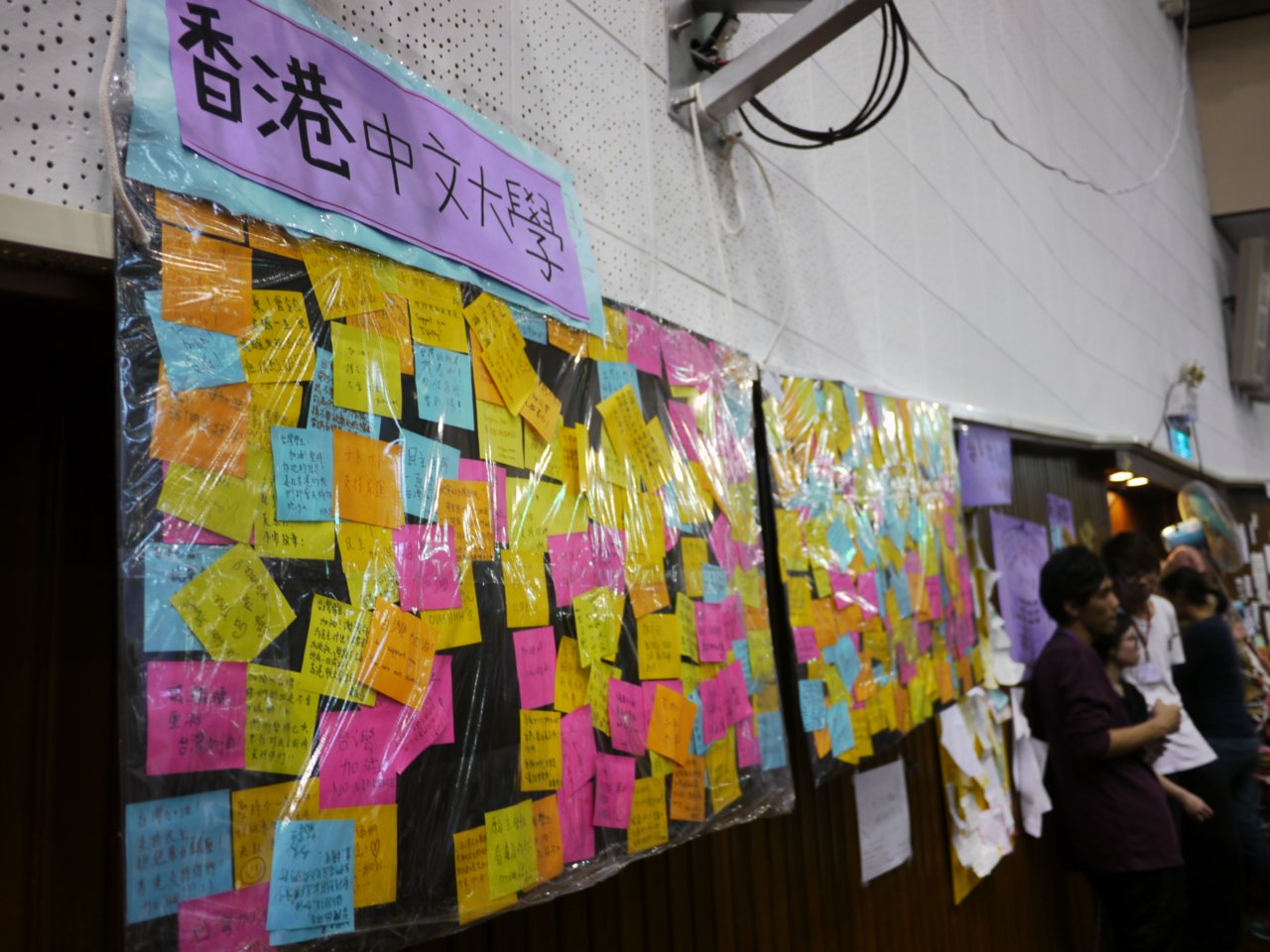
Fig. 4. The panel on the wall of the occupied main chamber of the Legislature (Photo from the author).

Fig. 5. The items returned by a search to the Archive, using the Chinese phrase for Department of Social Work.
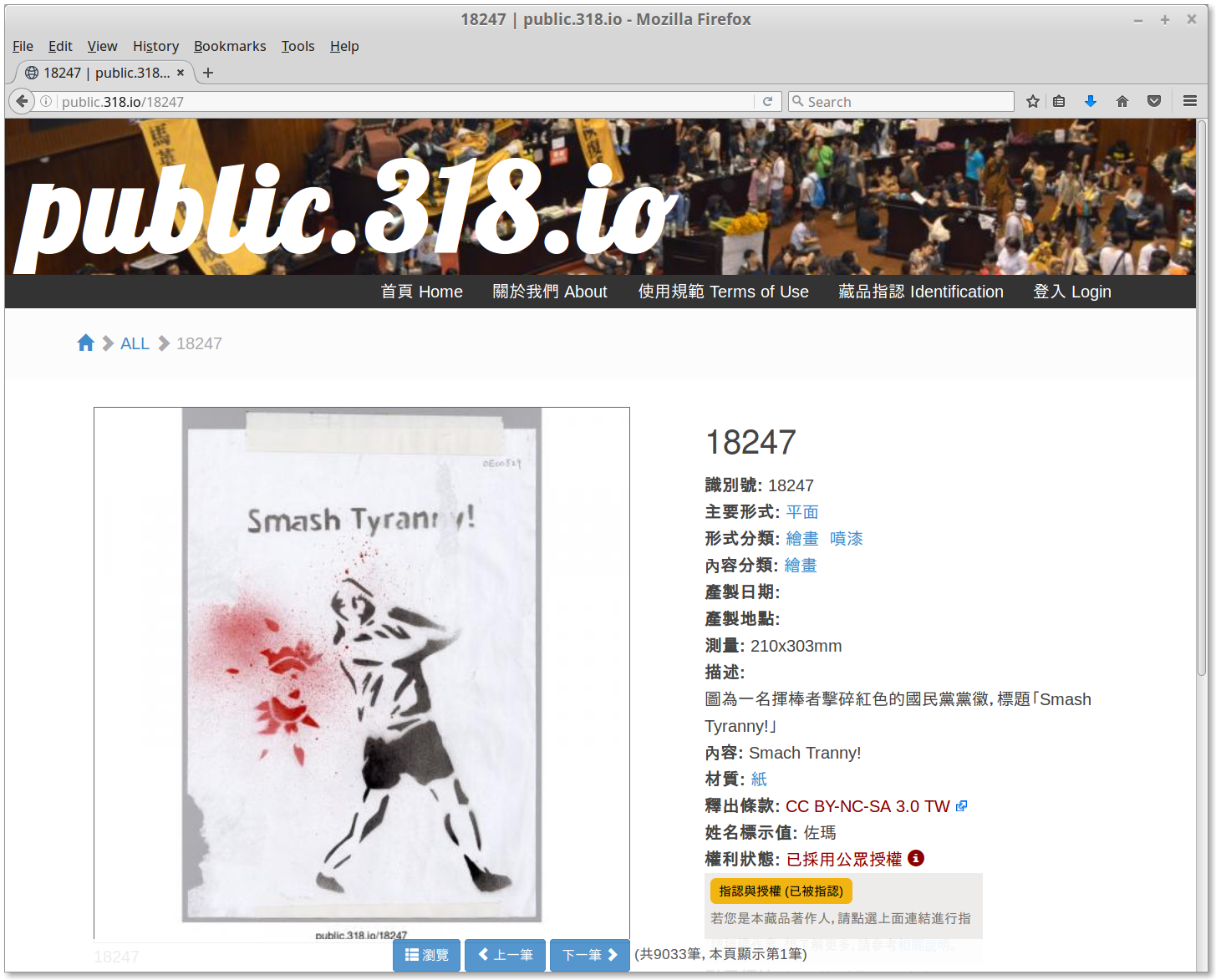
Fig. 6. An identified artifact, released under a Creative Commons License. Archive page: <http://public.318.io/18247/>.
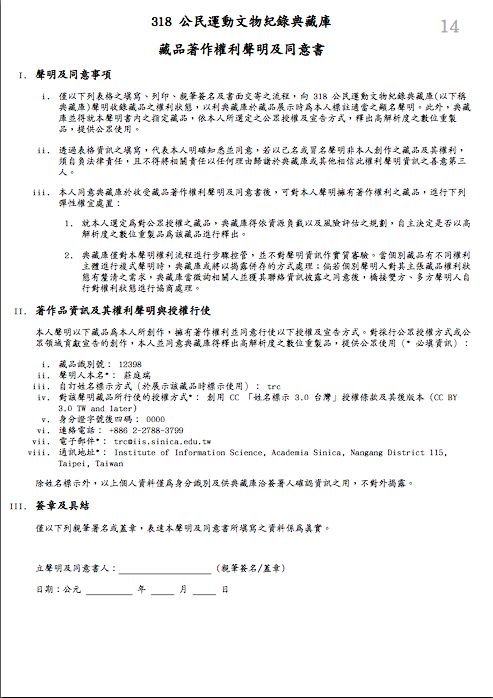
Fig. 7A. A copyright declaration and release form.
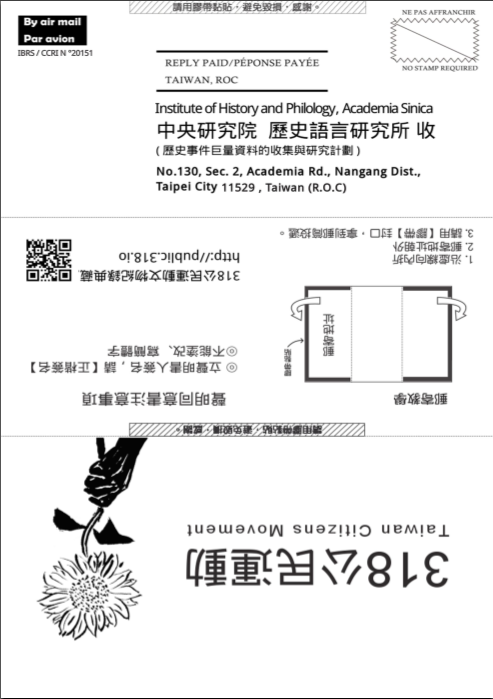
Fig. 7B. The back cover of the form, to be folded into an envelope and posted — NO STAMP REQUIRED.
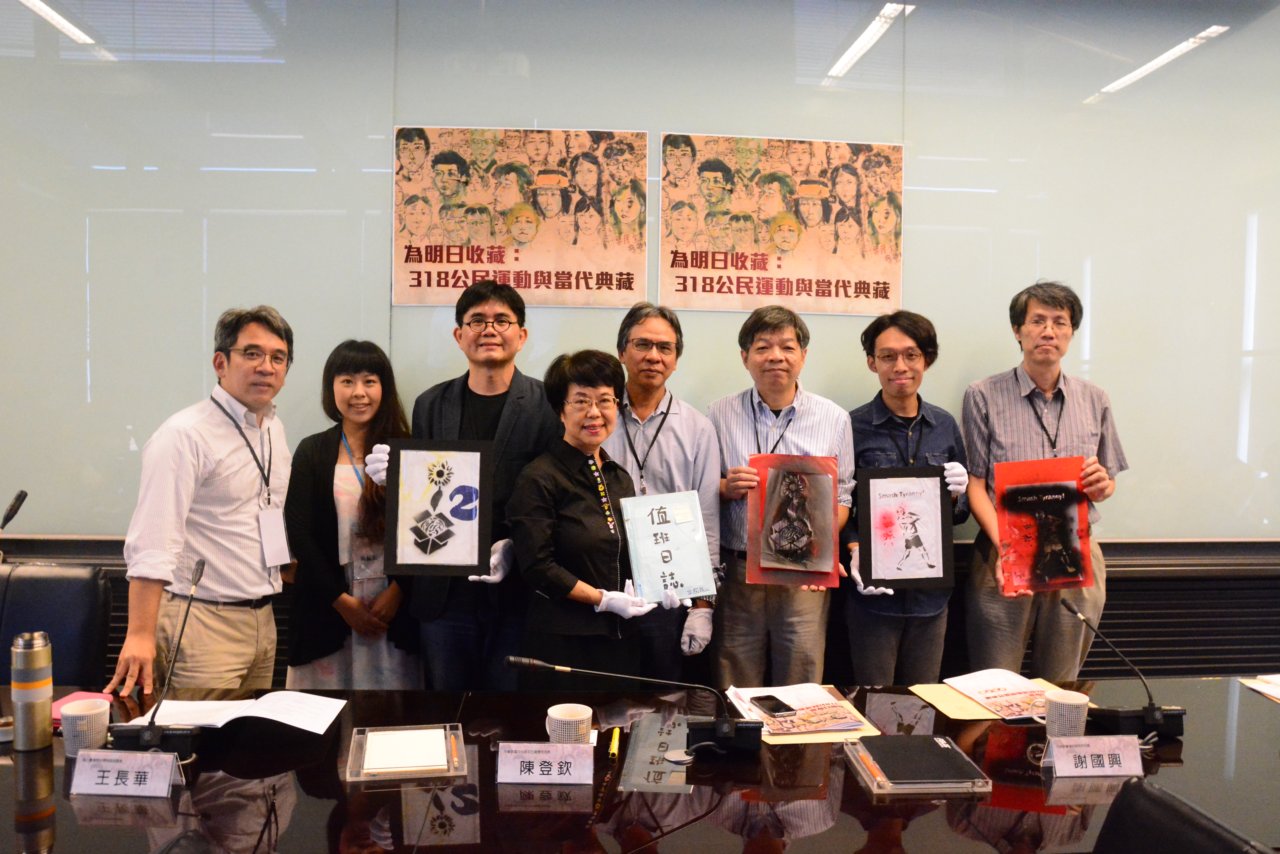
Fig. 8. The collection was transferred to the National Museum of Taiwan History (Liberty Times, 2016; Photo by courtesy of the Museum).
References
318 Civil Movement Archive (2017). Background about the 318 Civil Movement Archive. Retrieved from <http://public.318.io/about/>. Terms of Use of the Archive. Retrieved from <http://public.318.io/usage/>. List of identified artifacts in the Archive. Retrieved from <http://public.318.io/identified_collections/>.
318 Civil Movement Expo (2017). An online exposition of the Movement drawing from items in the Archive. Retrieved from <http://expo.318.io/>.
Ashenfelder, M. (2012). Activist Archivists and Digital Preservation. Retrieved from <https://blogs.loc.gov/thesignal/2012/10/activist-archivists-and-digital-preservation/>.
Besser, H., Farb, S. E., Grappone, T., and Jamshidi, A. (2014). Ethics, Technology and the Challenges of Documenting History in Real Time. Paper presented at: IFLA WLIC 2014. Retrieved from <http://library.ifla.org/981/>
Chuang, T.-R. (2016). Collective Memory of Contemporary Events: From Orphaned Works to the Public Domain (in Chinese). Retrieved from <http://media.academia.tw/u/trc/m/318-forum-draft/>.
Dulong de Rosnay, M. and Musiani, F. (2012). The Preservation of Digital Heritage: Epistemological and Legal Reflections. In: ESSACHESS Journal for Communication Studies, vol. 5, no. 2 (10). Retrieved from <http://www.essachess.com/index.php/jcs/article/view/169>.
Evans, S., Perricci, A. L., and Roberts, A. (2014). "Why archive?" and Other Important Questions Asked by Occupiers. In: Morrone, M. (ed) Informed Agitation: Library and Information Skills in Social Justice Movements and Beyond. Retrieved from <https://doi.org/10.7916/D80R9MGR>.
Hajek, A., Lohmeier, C., and Pentzold, C., editors, (2016). Memory in a Mediated World: Remembrance and Reconstruction. Palgrave Macmillan Memory Studies. Retrieved from <https://doi.org/10.1057/9781137470126>.
Hioe, B., editor, (2018). The Daybreak Project. Retrieved from <https://daybreak.newbloommag.net/>.
Hwang, M.-C. (2014). On "Big Data", Historical Materials Collection, and History Writing (in Chinese). Retrieved from <http://kam-a-tiam.typepad.com/blog/2014/06/%E5%B7%A8%E9%87%8F%E8%B3%87%E6%96%99%E6%A6%82%E5%BF%B5%E4%B8%8B%E7%9A%84%E5%8F%B2%E6%96%99%E6%94%B6%E9%9B%86%E8%88%87%E6%AD%B7%E5%8F%B2%E6%9B%B8%E5%AF%AB.html>
Internet Archive (2017). The Occupy Wall Street collection. Retrieved from <https://archive.org/details/occupywallstreet>.
Liberty Times (2016). Artifacts From The 318 Student Movement Handed Over To The National Museum of Taiwan History (in Chinese), 2016-11-15. Retrieved from <http://news.ltn.com.tw/news/life/paper/1052141>.
Morrone, M., editor, (2014). Informed Agitation: Library and Information Skills in Social Justice Movements and Beyond. Library Juice Press. Retrieved from <https://informedagitation.info/>.
Musiani, F. and Schafer, V. (2017). Digital Heritage and Heritagization. In: RESET, no. 6. Retrieved from <http://reset.revues.org/806>.
New York University (2017). Guide to the Occupy Wall Street Archives Working Group Records TAM.630. Retrieved from <http://dlib.nyu.edu/findingaids/html/tamwag/tam_630/>.
Occupy Archive Project (2017). Retrieved from <http://occupyarchive.org/>.
Tsai, K.-Y. (2016). Collecting for the Future: Note from the Forum on the 318 Civil Movement Archive and Contemporary Archiving (in Chinese). In: Historical Taiwan, no. 13. Retrieved from <http://mocfile.moc.gov.tw/files/201707/0b1d2aac-6955-4d03-af9d-d7fd7eaf53a7.pdf>.
Voice of America (2014). Students Against CSSTA Continue To Occupy The Main Chamber Of The Legislature (in Chinese), 2014-03-19. Retrieved from <http://www.voachinese.com/a/taiwan-students-protest-20140319/1874406.html>.
Wikipedia (2018). Sunflower Student Movement. Retrieved from <https://en.wikipedia.org/wiki/Sunflower_Student_Movement>.